A History of Innovation, Collaboration, and Education
Since its inception, Manufacturing USA has been a catalyst for U.S. competitiveness, bringing together people, ideas, and technology to turn early-stage scientific breakthroughs into commercial-scale American manufacturing.
- The network has grown to 18 manufacturing innovation institutes, sponsored by the U.S. Departments of Commerce, Energy, and War.
- The institute model creates ecosystems of stakeholders from industry, academia, and government working together on transformational projects related to advanced technologies, supply chains, and workforce development.
Where we Started
In the early 2010s, global supply chains for advanced technology products had shifted overseas, threatening U.S. leadership in manufacturing. While the United States remained a leader in innovation and R&D, there were urgent concerns about the risks of the nation’s declining competitive position related to innovation, the advancement of critical technologies, and workforce skills.
To address these concerns, an independent President's Council of Advisors on Science and Technology (PCAST) recommended the formation of an “Advanced Manufacturing Partnership” in 2011. This PCAST initiative—led by Dow Chemical Company CEO Andrew Liveris and MIT President Susan Hockfield—was charged with identifying collaborative opportunities between industry, academia, and government that would spark development and investment in emerging technologies and partnerships with the potential to transform and reinvigorate manufacturing in the United States.
2012
Initial recommendations proposing a national network of collaborative manufacturing institutes.
2013
A foundational operating framework for the institutes, shaped by a public Request for Information and nationwide stakeholder workshops.
2014
An actionable blueprint to secure leadership in emerging technologies, expand the network, and build a skilled workforce.
Revitalize American Manufacturing and Innovation (RAMI) Act
Bipartisan legislation formally establishing the Manufacturing USA program and network in federal law.
2019
Congressional reauthorization expanding program scope and purposes.
Where We Are Now
Today, the Manufacturing USA network is helping position the U.S. as a global leader in advanced manufacturing while supporting critical infrastructure for national security. The network has supported key national priorities through technology development, workforce preparation, and strengthening domestic supply chains. The examples below highlight representative areas where the network is delivering impact.










Institute Impact
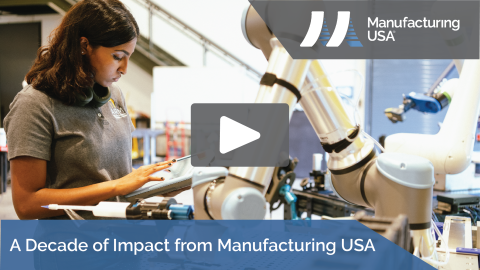
Read more about the achievements of individual institutes who have turned ten — and their plans for the next decade and beyond.